
What challenger brands understand that large FMCG organisations are relearning.
For the past seven years — in boardrooms, leadership programmes and digital upskilling sessions with global FMCG brands — I’ve been repeating the same message:
Community will beat scale.
When I first started saying it, it sounded progressive. Even slightly controversial (in fact the FMCG brands were already behind which I why I get them to look at challenger brands as the competitors they should be looking out for).
After all, scale has always been the advantage of large organisations.
Bigger budgets.
Wider distribution.
More resources.
But something has shifted.
Today, I’m increasingly hearing senior leaders say:
“We need to start acting more like a challenger brand.”
That statement alone should make every large organisation pause.
Because if the companies with the most resources believe they need to behave like the smallest players in the market, something fundamental has changed.
And it has.
Scale used to win.
Today, relevance does.
The Challenger Advantage
The challenger brands winning share right now are not always outspending their competitors.
They are not always out-distributing them either.
Instead, they are doing a few things extremely well:
- Building distinct brand personality
- Moving at 12-week speed instead of 12-month planning cycles
- Growing up digitally native
- Talking with communities — not at them
This last point matters more than many organisations realise.
Because people don’t build relationships with corporations.
They build relationships with communities.
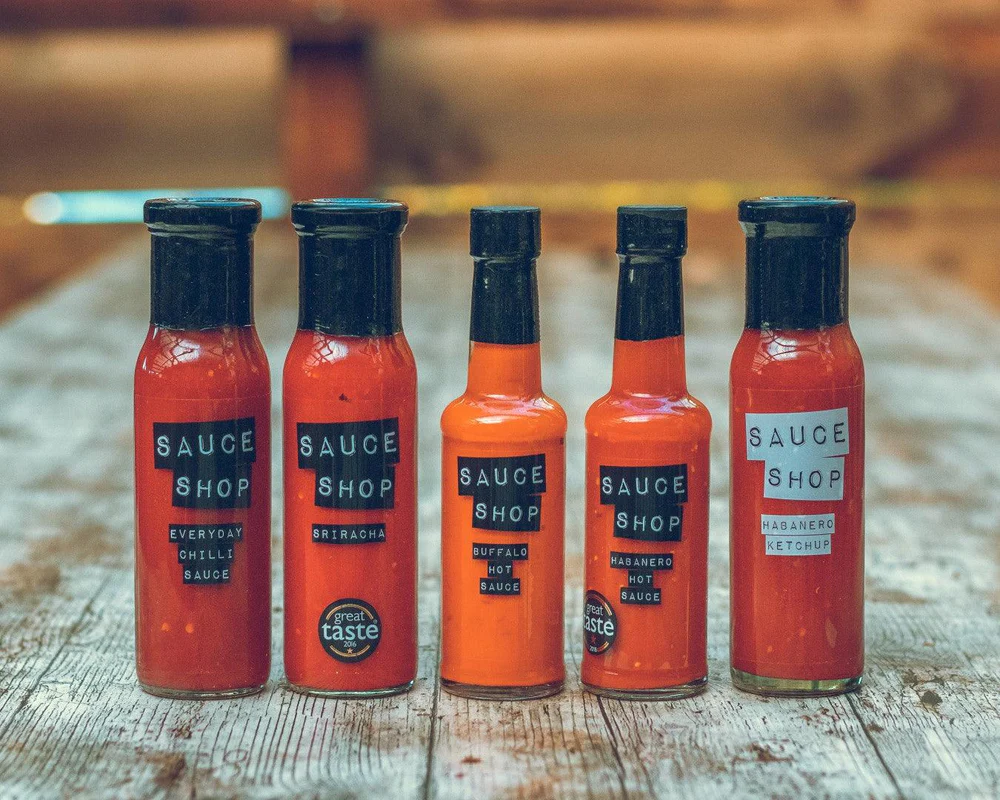
A Real FMCG Example: Sauce Shop
One brand I’ve been using in FMCG upskilling sessions for years is Sauce Shop.
Seven years ago, when I first started sharing their story in training sessions, they were still very much a challenger brand.
They began as a market stall.
A genuinely small operation.
But they built something powerful from the beginning:
A loyal community.
They talked directly to their customers.
They experimented openly.
They built personality into the brand.
Fast forward a few years and the story is very different.
Sauce Shop is now stocked in major retailers across the UK.
But the most interesting part isn’t distribution.
It’s culture.
Today they’re doing brand collaborations that many large FMCG companies would love to be part of.
And when I discuss those collaborations in leadership sessions, the same question often comes up:
“Why weren’t the big brands asked?”
The answer is usually simple.
Because they weren’t part of the community.
Sauce Shop grew with its audience.
Many larger brands tried to enter the conversation much later.
Where Challenger Brands Are Showing Up
Look closely at the brands gaining traction today.
They are not simply executing marketing plans.
They are participating in ecosystems.
They:
- Launch products fast and iterate publicly
- Show up natively on platforms like TikTok Shop
- Spend time inside Reddit threads and niche communities
- Work with creators who have genuine engagement, not just reach
- Create moments people want to talk about
They understand something simple:
Attention now lives inside communities.
And communities reward authenticity, speed and relevance.
Not scale.
What Large Organisations Are Still Optimising
Meanwhile, many established organisations are understandably focused elsewhere.
They are:
- Optimising SKU portfolios
- Protecting internal processes
- Managing operational complexity
- Coordinating across large internal structures
All of this is necessary.
But none of it builds emotional gravity.
And gravity is what steals share.
A Practical First Step
When leaders hear the word community, the instinct is often to ask:
“How do we build one?”
But that’s rarely the right starting point.
Communities are not built overnight.
And they cannot be manufactured inside a marketing plan.
Instead, start here:
Collaborate with an existing community.
Find one aligned to your audience.
Not to sponsor it.
Not to plaster logos across it.
But to genuinely participate.
That means:
- Contributing value
- Showing up physically or digitally
- Providing product meaningfully
- Sending your team to listen and learn
- Creating something with the community
Not simply marketing to it.
The Difference Between Buying and Belonging
Challenger brands often grow up inside communities.
Large brands frequently try to buy their way into them.
There is a difference.
One builds trust.
The other creates noise.
And in today’s fragmented digital landscape, trust travels further.
Encouraging Signs from Inside FMCG
The positive shift I’m seeing across FMCG organisations is this:
Leaders are starting to ask better questions.
Questions like:
- How do we rebuild brand personality?
- How do we move from siloed eCommerce to connected commerce?
- How do we link awareness, digital shelf and culture?
These are the right conversations.
Because scale still matters.
Distribution still matters.
But scale without community?
It’s just logistics.
Community Is the Real Competitive Moat
Community is not a campaign.
It’s not a social media tactic.
And it’s not something that can be switched on during a quarterly marketing push.
Community is deeper than that.
It creates advocacy.
It creates cultural relevance.
And ultimately, it creates resilience.
In other words:
Community is a moat.
And while this idea may feel new to some organisations, the truth is simpler.
It isn’t new.
It’s just finally becoming a strategic priority.
Cognitive Union is a progressive, boutique learning and performance consultancy. We work with forward-thinking businesses. Transforming their people. Shaping their culture. Helping them embrace change and take on the world. Find this blog useful? Sign up to our email newsletter (bottom of this page) where you can receive articles like this and other insights (not publicly published), and you can also follow us on LinkedIn.