
The heading of this post is drawn from one element of our learning philosophy, which illustrates how we think about the way capability development can be enhanced through learning. Over the course of the next few weeks, I’d like to expand on some of these principles.
Picture two workshops with the same objective and content
Picture two workshops running the same brief. Identical slide deck. Identical case study. Forty minutes on stakeholder mapping, timed to the minute.
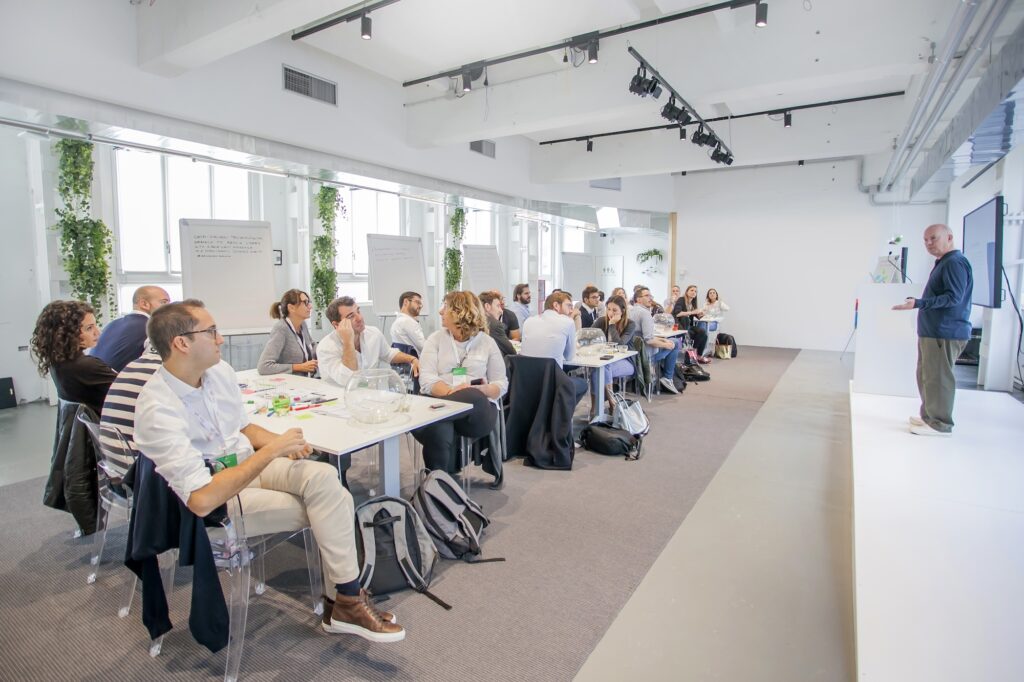
In Room A, hands go up before the question is finished. The whiteboard fills faster than anyone can photograph it. Someone challenges the model on slide fourteen, and the facilitator lets the challenge stand, works it through with the room, and the whole group ends up somewhere better than the deck ever planned for. Three weeks later, half of them are still using the framework, unprompted, in real meetings.
In Room B, the same forty minutes produce a worksheet filled in, in silence. Nodding in all the right places. Polite applause. By Friday, nobody could tell you what stakeholder mapping is.
Same content. Same case study. Same forty minutes. Wildly different outcome.
Content is not really the thing…
Most organisations buy content. A framework, a model, a set of slick slides with the right logos in the right corners. Then they hand it to whoever is free that Tuesday and hope for the best.
It rarely works, because content was never the multiplier. A framework sitting in a deck has exactly zero effect on anyone. It only starts to matter once it meets a room full of people who have to do something with it: argue with it, apply it to their own mess of a Tuesday, test it against a customer who won’t behave the way the case study did.
What happens in that meeting between framework and room is not automatic. It is designed, or it isn’t. It is held by someone who knows what they’re doing, or it is merely presented by someone reading their own slides aloud. Those are not the same skill, and treating them as interchangeable is where most training budgets quietly leak away.
Presenting, training, facilitating: three different jobs
Here is a distinction we will keep coming back to across this series, because it explains almost everything else.
Presenting is a ‘push’ mechanism. One person has information, an audience receives it. Good presenting is clear, well-structured and often genuinely useful. But the traffic only moves in one direction.
Training is ‘push’ too, maybe with a demo or two attached. Here’s the skill, here’s someone doing it, now you have a go. Better than presenting alone, because at least there’s a rehearsal. Still fundamentally something done to a room rather than with it.
Facilitation, however, is ‘pull’. The facilitator’s job isn’t to transmit what they know. It’s to draw out what the room already half-knows, sharpen it, test it against reality, and let the group arrive somewhere they couldn’t have reached alone, including places the facilitator didn’t map in advance.
Each has its place. A regulatory update might genuinely just need presenting. A new piece of software genuinely needs training. But ask a room to change how it thinks, how it sells, how it handles a difficult customer, and pushing information at people is close to useless. You need ‘pull’. You need facilitation. And that is a distinct craft, learned and practised, not a personality trait some trainers happen to have and others don’t.
The decisions nobody sees
Watch a strong facilitator for an hour and you’ll notice remarkably little. That’s rather the point. But underneath the apparent ease sit dozens of small decisions, made and remade constantly, that account for the entire gap between Room A and Room B.
Who talks first. Open with the expert view and you’ve told the room its job is to listen. Open with a question and you’ve told the room its job is to think.
What happens with silence. Most people, facilitators included, rush to fill it. The room reads that rush as a signal: don’t take too long to answer, I’ll bail you out. A facilitator who can sit in silence for an uncomfortable eight seconds gets a different, deeper answer than one who can’t.
Where the facilitator stands, literally and figuratively. Sometimes the job is out front, holding the energy of the room and driving it forward. Sometimes it’s alongside a group that’s stuck, kneeling down to their level to nudge them past a blocker without doing the thinking for them. Sometimes the right move is to step back entirely, watch, and let the room find its own way, only stepping in if it genuinely needs you. We learned about these three facilitation modes when we were facilitators in the Google Digital Academy, and we’ve held them dear since. Forward, Alongside and Behind. We’ll dig into each one properly later in this series. For now, the point is simpler: knowing which mode the room needs, right now, this minute, is a skill in itself. Most people default to one mode regardless of what’s actually needed. The best facilitators read the room and move.
None of this shows up in a feedback form that asks whether the session was “engaging”. It shows up three months later, in whether anyone actually changed how they work.
Why this is a business problem, not a nice-to-have
For an L&D specialist juggling a budget, or a director trying to close a capability gap before it costs the business a client, this can look like an abstraction. It isn’t. It’s the whole game.
Activity without impact is expensive. We’re all struggling with people committing time to learning, and we have to ask ourselves why… A day out of the business, room hire, facilitator fees, the opportunity cost of your best people sitting in a chair instead of doing their jobs: none of that is cheap, and none of it is justified by good feedback scores alone. The only thing that justifies the time, or the spend is whether people leave the room doing something differently, and keep doing it after the novelty wears off.
That outcome is not a function of the content. Plenty of mediocre content, well facilitated, changes behaviour. Plenty of brilliant content, badly delivered, changes nothing at all. If you’re the person signing off the budget, the question worth asking isn’t “is the material good?” It’s “who is holding the room, and do they know what they’re doing?”
A founding conviction
This is the belief this whole set of posts is built on, and we’ll return to it from every angle over the coming months: the person holding the room matters more than what’s on the slide behind them. Get that person right, trained and deliberate in their craft, and mediocre content still lands. Get it wrong, and the best framework in the world sits there, unused, while the room quietly waits for the session to end.
We think good facilitation deserves to be treated as seriously as the content it’s meant to bring to life. Most organisations don’t. That gap is where we operate, and it’s why the room, not the deck, is where this series starts.
Cognitive Union works with large B2C and B2B businesses to build the commercial skills, digital fluency and customer-first thinking their teams need to perform — closing the capability gaps that sit between where teams are today and where the business needs them to be.
Lead. Don’t follow.
Find this blog useful? Sign up to our email newsletter (bottom of this page) where you can receive articles like this and other insights (not publicly published), and you can also follow us on LinkedIn.